

Ask a warehouse, bakery or garment factory what packaging they use most and the answer is often the plainest bag on the shelf. Flat poly bags have no gussets, no handles and usually no closure. They are a simple tube of film sealed at the bottom and open at the top, and that simplicity is exactly why they are cheap, fast to fill and easy to stock in many sizes.
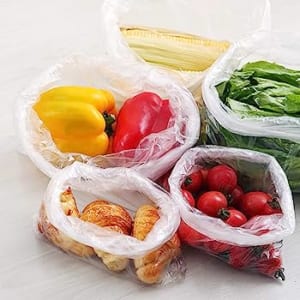
What flat poly bags are made from
Most are LDPE or an LDPE and LLDPE blend. The result is soft, flexible film with high clarity, so the product inside is easy to see and scan. It is also water resistant and seals well.
HDPE versions exist too. They feel crisper, look slightly cloudy and give more strength at a lower thickness, which suits bulk parts or bread where clarity matters less. A rough comparison:
| Property | LDPE / LLDPE flat bag | HDPE flat bag |
|---|---|---|
| Feel | Soft, stretchy | Crisp, paper-like |
| Clarity | High | Translucent |
| Strength at same micron | Good, more puncture give | Higher tensile strength |
| Typical use | Garments, food, retail display | Parts, bulk food, liners |
Where they get used
Food. Bakeries, confectioners and snack packers use flat bags for bread rolls, sweets, nuts and dried fruit. Butchers and cheese counters use them as inner bags. For any food use, the resin should comply with food-contact rules; Hanpak supplies flat bags made from resin that complies with FDA 21 CFR 177.1520, and SGS test reports are available for many products. A well-sealed bag also slows moisture loss, which helps baked goods and dried products keep their texture longer.
Apparel. Shirts, trousers and knitwear are folded into flat bags at the factory to keep them clean through shipping and retail. Many brands add a suffocation warning and a hole pattern to meet market rules.
Parts and storage. Screws, electronic components, documents and spare parts are bagged, labelled and boxed. Clear film means staff can identify items without opening the bag.
Liners and over-bags. Larger flat bags line cartons or drums and cover products on a shelf. For long items or custom lengths, lay flat tubing on a roll lets you cut and seal your own size.
Writing an order specification
Clear specs avoid most disputes. Before asking for a price, decide on:
- Width and length, measured flat on the outside, plus any lip or flap.
- Thickness in microns, and whether that is per wall or total.
- Material: LDPE, LLDPE blend or HDPE, clear or coloured.
- Extras such as vent holes, a hang hole, a self-seal strip or printed warnings.
- Packing: bags per pack, packs per carton, carton labels and pallet layout.
If you need a reclosable option, look at zipper bags instead. Brands wanting a logo or barcode on the bag can use private label and custom printing.
“Thickness” causes more mix-ups on flat bags than anything else. Some markets quote per wall, others total, and others in mil or gauge. We usually suggest writing the figure as microns per single wall on the purchase order and checking it against the approved sample before production starts.
From the Hanpak team
Lead time and quality checks
For a first order, Hanpak’s lead time for bags is 4–6 weeks from sample approval, and 3–4 weeks for repeat orders. Each pack carries a lot number, and production photos are sent while the order is running, so you can check print and packing before the goods are loaded.
Order flat poly bags from Hanpak
Send your size list and use, and we will price it within 48 hours. MOQ is flexible and set per size and design. Request a quote or samples, or message us on WhatsApp; samples are free.