

Clear plastic poly bags are polyethylene bags, usually LDPE, that let you see the product inside while keeping out dust, moisture and dirt. The most common style is a flat open-top bag at 2 mil (51 µm), but clear bags also come with zippers, on rolls, on wickets, with handles and with drawstrings. Choose the style by how the bag is filled and used, and the thickness by how heavy and sharp the contents are.
We make clear poly bags in most of these styles at Hanpak, all to custom size. This guide covers the types, the materials, a size and thickness chart, and what to check before you order in bulk.
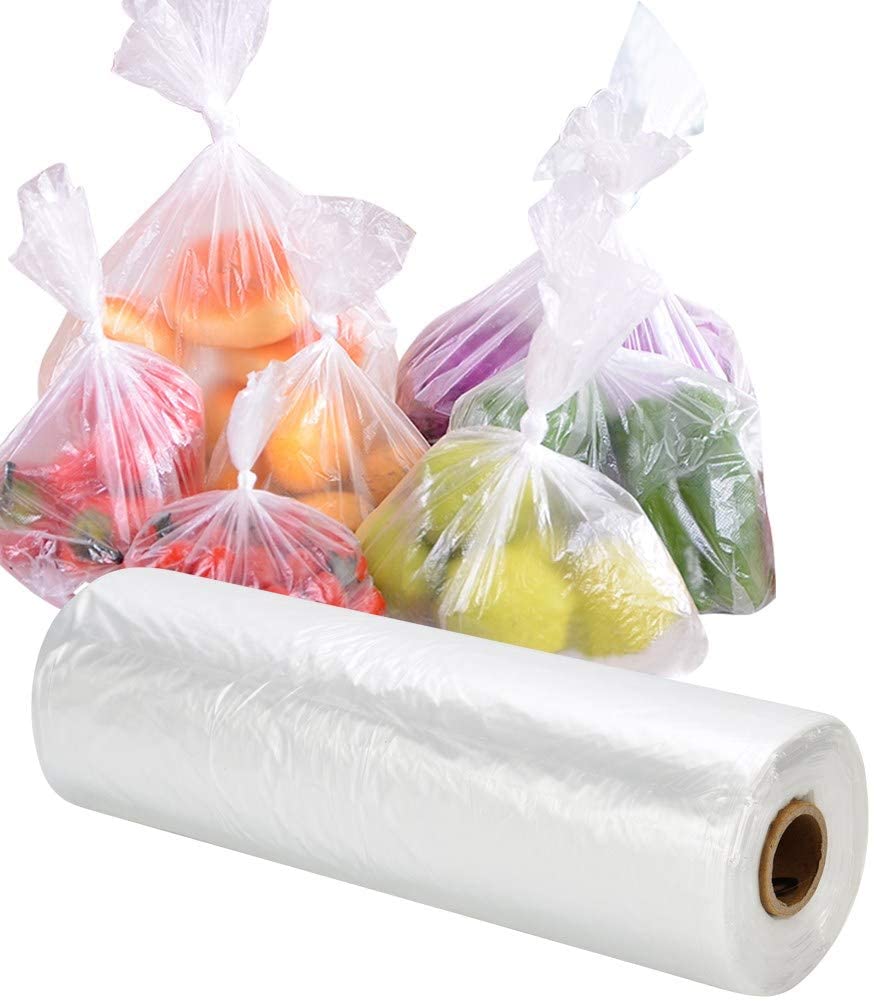
Why buyers use clear poly bags
- The customer sees the product. No need to open the bag to check color, size or count. That cuts returns and speeds up picking.
- Protection at low cost. A thin layer of PE keeps dust, moisture and fingerprints off apparel, parts and food.
- Easy to scan and label. Barcodes on the product can be read through the film, or you stick a label on the bag.
- Food use. Clear LDPE and HDPE bags are standard for produce, bread, ice and frozen food. Our food-contact bags are FDA-compliant food-contact material (21 CFR 177.1520).
- They can carry a brand. Clear bags print well, and a white base layer under the artwork keeps colors strong on clear film.
Materials: which “clear” do you need?
Not every clear bag is equally clear. The resin decides how it looks and how it behaves.
| Material | Look | Feel | Best for |
|---|---|---|---|
| LDPE / LLDPE | Clear with a slight haze | Soft, stretchy, quiet | Most flat, zipper and shipping bags; freezer use |
| HDPE | Translucent, frosty | Crisp, papery | Produce rolls, T-shirt bags, thin liners; lowest cost per bag |
| OPP (polypropylene) | Crystal clear, glossy | Stiff, crinkly | Display bags for cards, apparel, bakery and candy |
Two tips: virgin resin gives the cleanest clear film, while recycled content tends to look hazy or gray. And if you need sparkle for a retail shelf, OPP is clearer than any PE, but it is stiffer and not suited to the freezer.
Types of clear poly bags
| Type | How it works | Typical use |
|---|---|---|
| Flat open-top bags | Simple bag, sealed on three sides; you seal or tape the top | Parts, apparel, kitting, food storage |
| Zipper and slider bags | Press-to-close or slider track; reusable | Hardware, snacks, freezer, retail packs |
| Wicket bags | Stacked on a wire wicket for fast hand or machine loading | Bread, bakery, produce, ice |
| Bags on roll (flat or T-shirt) | Perforated roll; tear off one at a time | Supermarket produce, deli, bulk foods |
| Star seal bags on roll | Star-shaped bottom seal, no gusset; fits the can well | Clear can liners, recycling bins |
| Drawstring bags | Draw tape at the top to close and carry | Clear trash bags, recycling, laundry |
| Die-cut and soft-loop handle bags | Punched handle or heat-sealed loop | Retail, trade shows, take-away |
| Lay-flat tubing | Continuous tube on roll; cut and seal to any length | Long or odd-sized items |
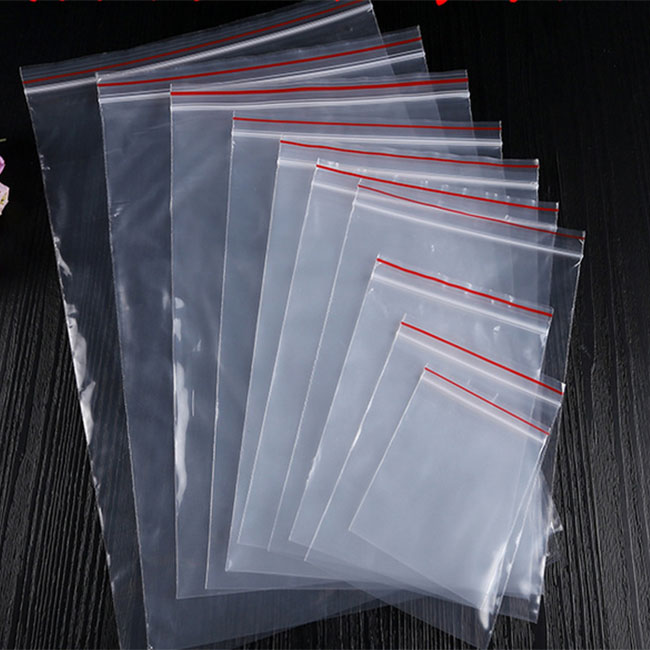
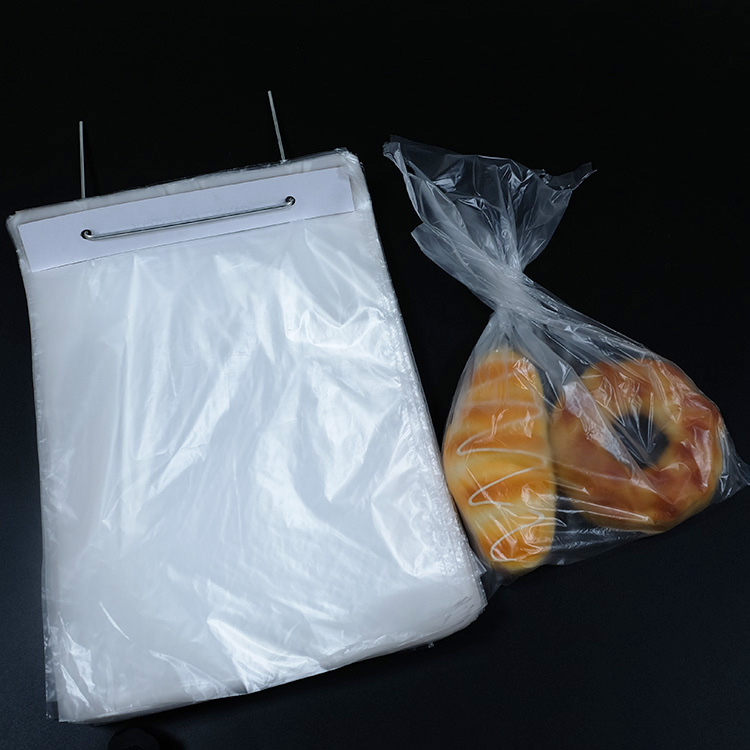
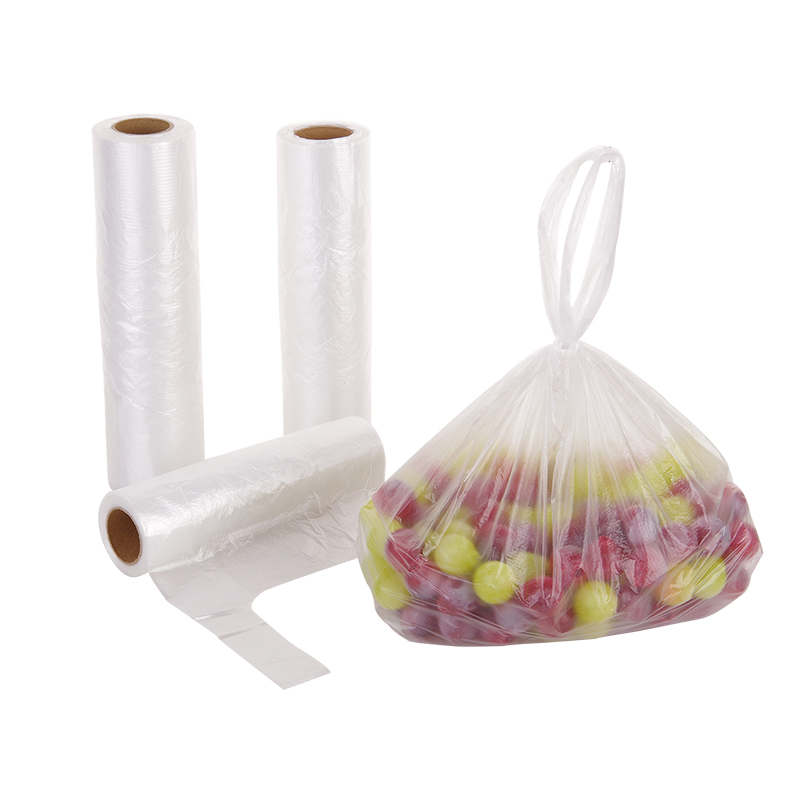


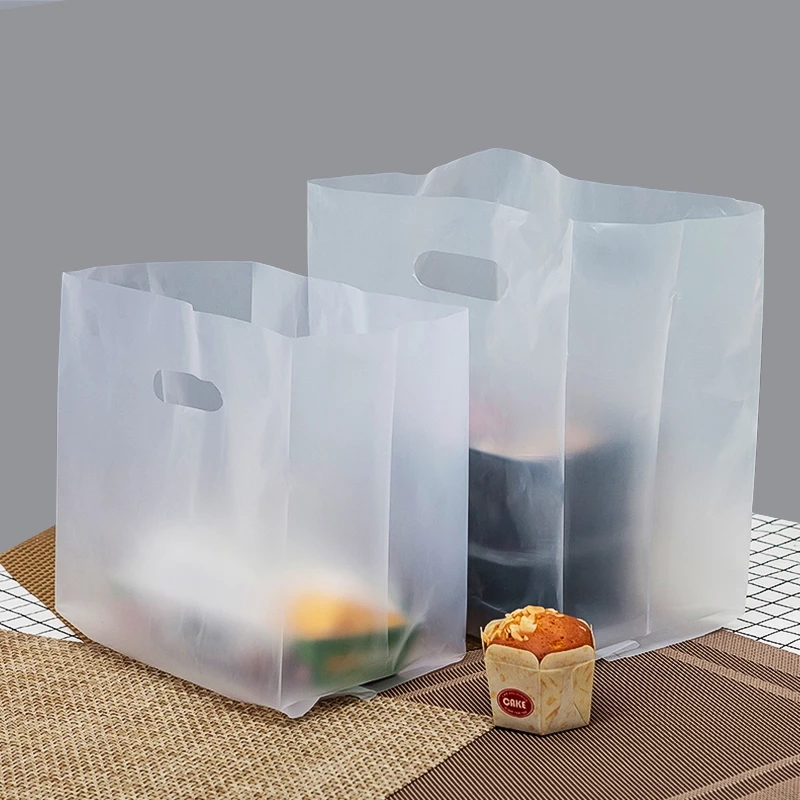
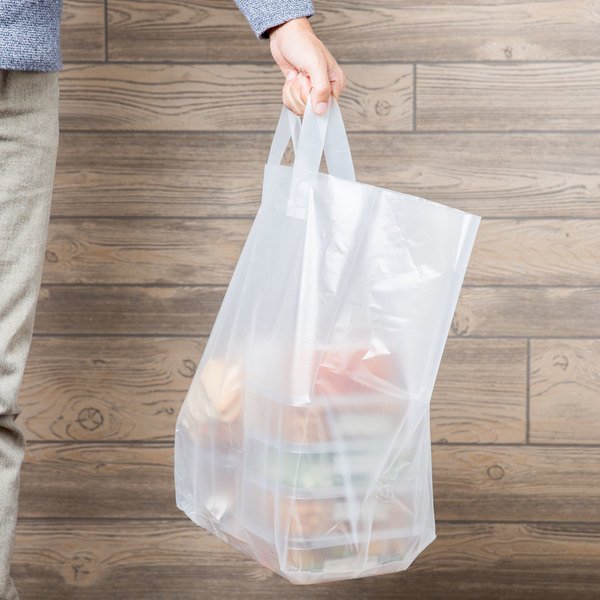
Clear poly bag thickness guide
| Thickness | Microns | What it is good for |
|---|---|---|
| Under 0.5 mil | Under 13 µm | HDPE produce rolls, light single-use bags |
| 1 mil | 25 µm | Light protection and short-term storage |
| 1.5 mil | 38 µm | Newspaper bags, light retail, bakery |
| 2 mil | 51 µm | The everyday choice for parts, clothing and food |
| 3 mil | 76 µm | Hardware, heavier parts, reusable zipper bags |
| 4 mil | 102 µm | Industrial parts and tools |
| 6 mil | 152 µm | Sharp or heavy items that would puncture thinner film |
1 mil = 25.4 µm. Thickness alone doesn’t tell the whole story: a crisp HDPE bag carries more at the same gauge than a soft LDPE bag, but punctures more easily.
Common flat bag sizes
Flat poly bags are measured width x length, inside dimensions, with the opening on the width. Add a bit of room for the product’s thickness: a flat bag loses usable length as the item gets thicker.
| Size (inches) | Size (cm) | Typical contents |
|---|---|---|
| 2 x 3 | 5 x 7.6 | Small parts, beads, jewelry |
| 4 x 6 | 10 x 15 | Screws, samples, cards |
| 6 x 9 | 15 x 23 | Socks, small accessories, snacks |
| 9 x 12 | 23 x 30 | Folded T-shirts, documents |
| 12 x 15 | 30 x 38 | Folded apparel, hoodies |
| 12 x 18 | 30 x 46 | Folded shirts and pants |
| 18 x 24 | 46 x 61 | Bedding, larger parts, kits |
| 20 x 30 | 51 x 76 | Blankets, bulk items, box liners |
These are common US stock sizes. We make any custom width, length and gusset.
Useful options
- Freezer grade. LDPE and LLDPE stay flexible in the cold. Use them, not OPP, for frozen food.
- Vent holes. For bread, produce and anything that needs to breathe.
- Self-adhesive lip or header. For resealable retail packs and hang-hole display.
- Suffocation warning print. Many retailers require a warning on larger bags. Ask your customer for their wording and size rules.
- Anti-static. Some electronics buyers ask for anti-static additive. Tell us the requirement and we will confirm what we can do.
- Printing. Gravure up to 8 colors, one or both sides, Pantone matching, white base layer on clear film. Plates are kept up to 2 years for reorders. See private label and custom printing.
Buying tips for importers
- Send a sample bag if you have one. It tells us resin, clarity, seal and feel better than any description.
- Say how the bag is filled. Hand-packed, on a wicket, or on an automatic bagger? Wicket and roll formats depend on your equipment.
- Specify thickness in one unit. “2 mil” or “50 µm”, not both rounded differently.
- Know the US duty picture. PE retail carrier bags (T-shirt checkout bags) from Vietnam are under US anti-dumping and countervailing duty orders. Produce rolls, trash bags and can liners, and mailers are not covered. Ask us if you are unsure where a style falls.
- Plan timing. First printed orders take 4–6 weeks, repeats 3–4 weeks. Plain samples from stock are free. We ship FOB, CFR or CIF, with payment by T/T or L/C.
Start with our clear flat poly bags, zipper bags, wicket bags and produce bags on roll.
FAQ
What are clear poly bags made of?
Most are low-density polyethylene (LDPE or LLDPE), which is clear, soft and flexible. Some are HDPE, which is frostier and crisper, or OPP polypropylene, which is crystal clear and stiff.
What thickness of clear poly bag do I need?
2 mil (51 µm) is the most common choice for parts, clothing and food. Go down to 1 mil for light items and short storage, up to 3–4 mil for hardware and heavy parts, and 6 mil for sharp items.
Are clear poly bags food safe?
Food-grade PE bags are used every day for produce, bakery, ice and frozen food. Our food-contact bags are FDA-compliant food-contact material (21 CFR 177.1520). Tell us the food and temperature so we can match the grade.
How do I measure a poly bag?
Measure the inside width across the opening, then the inside length from the opening to the bottom seal. For gusseted bags, add the fully opened gusset depth. Leave room for the product’s thickness.
Can clear poly bags be recycled?
PE is recyclable as a material, but many curbside programs don’t accept plastic film. Collection rules differ by city and country, so check local rules before printing a recycling message.
Send us the product, bag style, size and thickness you have in mind, or just a photo of the bag you use now. We will quote and send free samples from stock. Send us your spec.