

A ziplock bag (also called a zip lock bag, zipper bag or reclosable bag) is a polyethylene bag with a plastic track at the top that you press or slide shut and open again as many times as you like. It is used for food storage, freezer packs, travel toiletries, small parts, documents and retail packaging. Most are clear LDPE, 2 to 4 mil thick (50 to 100 microns), in sizes from about 2 x 2 in up to 14 x 24 in.
A quick note on the name. Ziploc is a registered trademark of S.C. Johnson & Son. People use “ziplock” for any bag of this type, the way they say “Kleenex” for tissue. Hanpak does not make Ziploc brand bags. We make generic and private label zipper bags to the buyer’s own spec and brand.
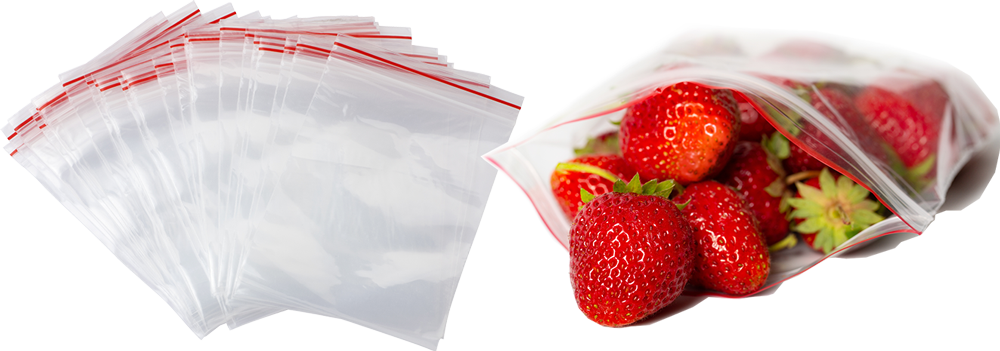
How a ziplock bag works
The closure is two extruded plastic profiles welded to the inside of the bag mouth: a rib on one side and a groove on the other. Press them together and the rib snaps into the groove. Pull the two sides apart and it opens.
There are two ways to close it:
- Press-to-close (pinch) zipper: you run your fingers along the track. Single track is standard; double track gives a firmer seal.
- Slider: a small plastic slider rides on the track and closes it for you. Easier for kids, older people and cold hands, and a bit more expensive. More on that in the buying tips below.
Be realistic about the seal. A standard 2 mil press-to-close bag keeps dust and moisture out, but it is not sold as airtight or leakproof. Polyethylene also lets some air and water vapor through over time. For airtight storage of food, a vacuum bag that is heat sealed is the right tool.
A short history
The plastic zipper bag dates back to a 1950s patent. Minigrip licensed the design in 1954, first for pencil bags. Dow Chemical began selling food storage bags under the Ziploc name in 1968, and the brand is now owned by S.C. Johnson. Today “zipper bag”, “reclosable bag” and “zip lock bag” are the generic trade names used by distributors.
Common ziplock bag sizes and thicknesses
Industrial and retail zipper bags are sold by inside width x length (below the track) and by thickness in mil. US distributors carry them from about 2 x 2 in to 14 x 24 in, in 2, 4 and 6 mil.
| Size (inches) | Size (cm, approx.) | Typical use |
|---|---|---|
| 2 x 3 | 5 x 7.5 | Pills, beads, buttons, small hardware |
| 3 x 4 | 7.5 x 10 | Jewelry, spare screws, seed packs |
| 4 x 6 | 10 x 15 | Samples, small parts, pharmacy |
| 6 x 9 | 15 x 23 | Snacks, half-sheet documents, cables |
| About 7 x 8 (quart) | 18 x 20 | Household food storage, travel liquids |
| 9 x 12 | 23 x 30 | Letter-size documents, clothing items |
| About 10.5 x 11 (gallon) | 27 x 28 | Freezer packs, meal prep, bulk food |
| 12 x 15 and up | 30 x 38 and up | Apparel, bulk parts, large kits |
Household “quart” and “gallon” bags vary a little by brand, so measure the bag you sell now before you order.
| Thickness | Microns | Use it for |
|---|---|---|
| 2 mil | 51 µm | Light items, food storage, retail packs |
| 4 mil | 102 µm | Heavy or sharp items, freezer use, repeated use |
| 6 mil | 152 µm | Heavy-duty industrial parts |

What ziplock bags are used for
1. Freezer storage that stays organized
Pack fruit pulp, meat, soup or cooked rice flat in a gallon bag, press the air out, seal and lay it flat to freeze. Flat bags stack like books and thaw faster. Use a heavier freezer-grade bag for this; thin storage bags puncture and let freezer burn in.
2. Marinating meat
Put the meat and marinade in the bag, squeeze the air out and seal. The meat stays covered with less marinade than a bowl needs. Keep it in the fridge, and lay the bag in a tray in case of a leak.
3. Air travel liquids
In the US, TSA’s 3-1-1 rule allows one quart-size clear zip-top bag of liquids, gels and creams per passenger in carry-on, each container 3.4 oz (100 ml) or less. A quart zipper bag is exactly what the rule asks for. Many airports outside the US apply a similar 100 ml rule; check your airline.
4. Packing clothes
Large bags keep outfits together and dry. Roll the clothes, press the air out, then seal, and you save space in the suitcase.
5. A clean ice pack
Freeze a damp sponge in a zipper bag. You get a reusable ice pack that does not drip as it melts.
6. Business and retail use
- Hardware, screws and spare parts kits
- Pharmacy and medical supplies
- Jewelry, beads and craft supplies, often with a hang hole for peg display
- Documents, samples and evidence bags with a white write-on block
- Snack packs and retail food portions
Are ziplock bags food safe?
Bags made from virgin polyethylene for food contact are safe for storing food. Our food zipper bags are FDA-compliant food-contact material (21 CFR 177.1520, the FDA rule for olefin polymers such as polyethylene). LDPE handles about 65 °C (149 °F) continuously, so standard zipper bags are not for cooking or the microwave unless the maker says so. They are fine in the fridge and freezer.
Buying tips for importers and retailers
- Measure inside dimensions. Width x length below the zipper, plus any lip above it.
- Pick the thickness for the product, not the price. 2 mil for light items, 4 mil for heavy or sharp ones.
- Choose the closure: single track, double track or slider. Our zipper bags page lists common press-to-close specs, and the LDPE slider zipper bag page covers slider options.
- Add features at the design stage: white write-on block, hang hole, colored track, printed logo or instructions. We match Pantone colors and keep printing plates up to 2 years; see private label printing.
- Do not use a brand name on your pack that you do not own. “Zipper bag”, “reclosable bag” or your own brand are safe choices on artwork.
- For airtight food packs, look at PA/PE vacuum bags instead of zipper bags.
Lead time is 4–6 weeks for a first printed order and 3–4 weeks for repeats. We ship FOB, CFR or CIF.
FAQ
What is the difference between a ziplock bag and a Ziploc bag?
Ziploc is a brand owned by S.C. Johnson. “Ziplock” or “zip lock” is the everyday name for any reclosable zipper bag, from any maker.
What are ziplock bags made of?
Usually low-density polyethylene (LDPE, resin code 4). Some retail bags use polypropylene for extra clarity.
Are ziplock bags airtight?
Not fully. A press-to-close bag keeps out dust and most moisture, but it is not sold as airtight or leakproof. Use a heat-sealed vacuum bag for airtight storage.
Can you reuse ziplock bags?
Yes, for dry foods and non-food items. Wash and dry them well. Do not reuse bags that held raw meat, fish or eggs.
What size is a quart ziplock bag?
About 7 x 8 in (18 x 20 cm), varying a little by brand. A gallon bag is about 10.5 x 11 in (27 x 28 cm).
If you sell zipper bags under your own brand, send us the size, thickness, closure and print you need, or a photo of the bag you buy now. We will quote and send a free sample. Send us your spec.