
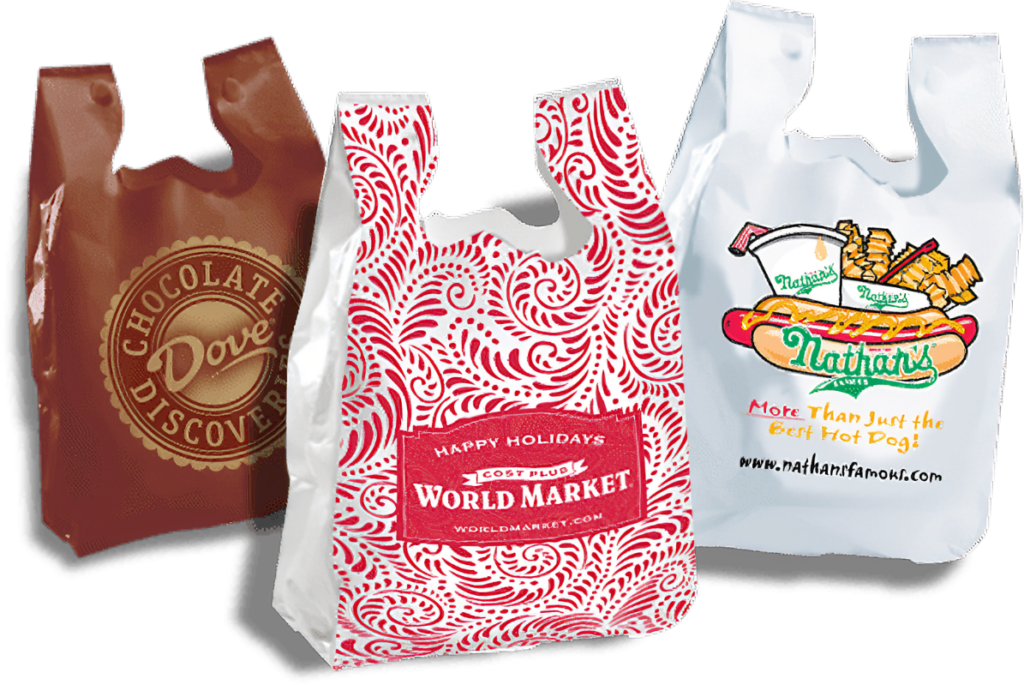
A store owner reorders bags and the new batch arrives with the logo a shade too dark and slightly off-centre. Nobody complains, but the shop looks a little less polished at every checkout for the next six months. Custom printed plastic bags are one of the cheapest ways to keep a brand in view. They only pay off when the print is consistent and the bag is strong enough to be reused.
Here is why printed bags work as marketing, which bag style fits each channel, and how to order them so the second run matches the first.
Why a printed bag keeps working
A plain bag is forgotten once it is emptied. A printed one goes on travelling. It is carried down the street, into offices and homes, then often reused for lunch, storage or as a bin liner. Each of those moments puts your name in front of someone at no extra cost.
Since you already have to buy bags, adding print raises the unit price only modestly. In return you get a clear logo that helps customers recognise you, space for a website, QR code or social handle, and a more established look. The reverse is also true. A thin bag that splits on the way home, or a smudged logo, works against you.
Matching the bag to the channel
| Channel | Usual bag | Why |
|---|---|---|
| Supermarkets, convenience stores, pharmacies | T-shirt bags | Strong, economical, fast to load at checkout |
| Boutiques, gift and fashion shops | Die cut handle bags | Cleaner shape and a larger flat print area |
| E-commerce and delivery | Poly mailers | Brand is seen on the doorstep |
| Bakeries and takeaway | Bread, produce and takeaway bags | Shop name builds local recognition |
| Trade shows and promotions | Die cut or loop handle bags | Visitors carry your logo round the hall |
Ordering printed bags, step by step
- Choose the style and film. HDPE gives a crisp, strong, economical bag. LDPE or LLDPE feels softer and glossier and stretches more before tearing.
- Set size, gusset and thickness. Measure a typical basket or order, not the single largest item, and state thickness in microns according to the load and how often you expect the bag to be reused.
- Prepare artwork. Send vector files with Pantone references and say how many colours you need on one or both sides. Flexographic printing is the usual method for volume bag runs, and each colour needs its own plate.
- Approve the proof and the sample. Check colour, position and the size of any small text or QR code.
- Agree packing details: pieces per pack, carton size and carton marks.
- Confirm timing. With Hanpak, a first bag order takes 4–6 weeks from sample approval and a repeat order 3–4 weeks. Production photos are sent during the run, and every pack carries a lot number.
Hanpak quotes within 48 hours of receiving your spec, and MOQ is flexible, quoted per size and design. More detail on the process is on our private label and custom printing page.
Colours look different on clear, white and coloured film. If your logo will sit on clear or tinted film, we usually suggest a white underprint beneath it so the brand colours stay true. A useful check is to keep one approved bag from the first run as the colour master and refer to it by lot number when you reorder.
From the Hanpak team
Frequently Asked Questions
Does printing make plastic bags much more expensive?
Printing adds plate and setup costs plus a small amount per bag. On larger orders the setup cost is spread over many units. Keeping the logo to one or two colours is usually the most economical choice.
Can recycled or biodegradable bags be printed?
Yes, most film types take print. Ask your supplier to confirm ink compatibility and to show a printed sample on the exact film before full production.
Put your logo on your next order
Hanpak supplies custom printed bags to retailers, importers and brand owners in more than 50 countries, from grocery T-shirt bags to mailers and die cut bags. Share your bag style, size and artwork to request a quote or samples through our contact page, or reach the team on WhatsApp.