
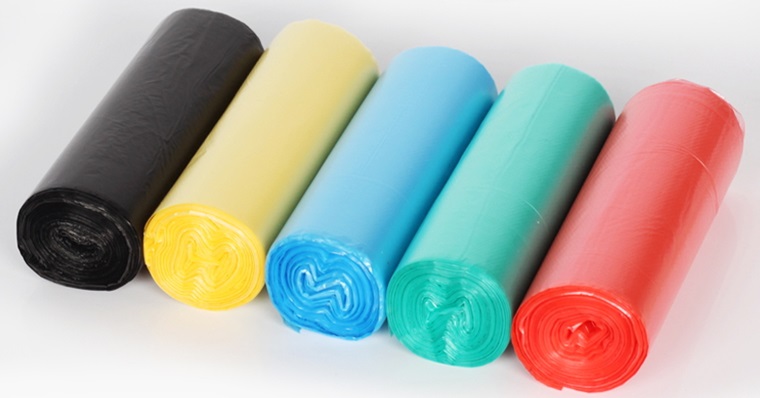
A safe garbage bag is a plain polyethylene bag made from clean resin, with no added heavy metals, no strong chemical smell, and only as much plastic as the job needs. Polyethylene itself is one of the most inert plastics there is. The risks come from what can be added to it: contaminated recycled material, poor pigments, heavy fragrance, and “biodegradable” additives that make claims the bag can’t keep.
We make garbage bags and can liners for the US and European markets, where buyers check these things. Here is what actually matters for health and for the environment, and how to spot a bag you shouldn’t buy.
What garbage bags are made of
Almost every garbage bag is polyethylene (PE), in one of three grades:
Looking for safer, greener trash bags?
We make trash bags from virgin or recycled resin, and offer bio-based PE made from sugarcane.
Drawstring Trash Bags · Biodegradable & Bio-Based Bags
Request a quote or WhatsApp +84 898 545 893- HDPE (high density): thin, stiff and crinkly. Used for light office liners and many thin shopping bags.
- LDPE and LLDPE (low density, linear low density): soft and stretchy. Used for kitchen bags, heavy duty liners and contractor bags.
To that base resin, makers add small amounts of color masterbatch (carbon black for black bags, titanium dioxide for white), sometimes a slip or anti-block agent so the bags open easily, and sometimes fragrance. Polyethylene contains only carbon and hydrogen. It has no plasticizers like the phthalates used in soft PVC, and no BPA.
| Bag type | Health concerns | Environmental concerns |
|---|---|---|
| Virgin PE, black or white | Very low | Fossil-based plastic; goes to landfill or incineration |
| PE with recycled content | Low if the recycled resin is clean and controlled | Lower; reuses plastic that would otherwise be waste |
| Cheap bags of unknown resin | Possible contamination, heavy metals in pigments, odor | Often thin and split, so more bags are used |
| Scented bags | Fragrance can bother people with allergies or asthma | Same as the base bag |
| “Degradable” additive bags (oxo) | Same as PE | Break into small fragments; banned in the EU |
| Certified compostable bags | Low | Useful only where an industrial composting program accepts them |
| Bio-based PE (from sugarcane) | Same as PE | Renewable source; recycles like normal PE; not biodegradable |
Are black garbage bags harmful to health?
A black garbage bag made from clean resin is not a health risk in normal use. You put trash in it and throw it away.

The concern with very cheap black bags is the source of the plastic. Black is the color that mixed recycled plastic of any origin can be turned into. When that recycled stream is uncontrolled, it can carry contaminants from whatever the plastic was before, including older pigments that contained lead or cadmium. Those metals do not belong in any bag.
In the US, nineteen states have Toxics in Packaging laws based on a common model. They ban intentionally added lead, cadmium, mercury and hexavalent chromium in packaging, and cap the total of the four at 100 parts per million. Garbage bags sold as trash bags are not always covered as “packaging”, but good importers write the same 100 ppm limit into their specs anyway, and a reputable factory has no problem meeting it.
Signs of a poor-quality bag
- A strong chemical or burnt smell when you open the box. Fresh PE film has very little odor.
- Gels, black specks, streaks or holes visible when you hold the film up to light.
- Very uneven thickness, with thin spots that stretch white when you pull them.
- Seals that peel apart by hand.
- No maker, size, gauge or count on the box.
Don’t use garbage bags for food
This is the one real everyday health risk. Garbage bags are not made or specified for food contact. They may contain recycled resin, pigments or fragrance that are fine for trash but not for something you will eat. Don’t use them to store produce, marinate meat or line a cooler of ice.
Use bags made for the job instead. Food-contact bags like our produce bags on roll and ice bags are made from FDA-compliant food-contact material (21 CFR 177.1520). The same goes for reusing printed shopping bags as bin liners: fine for trash, but they are not a food bag either.

Scented garbage bags
Scented bags are popular in the US kitchen market and do help with odor. The fragrance is a mix of chemicals blended into the film. Most people have no problem with it, but people with fragrance sensitivity, allergies or asthma can react to it, especially in a small room. If you sell to hospitals, schools or care homes, offer an unscented version.
Which garbage bags are better for the environment?
“Biodegradable” and “degradable” bags: be careful
Most bags sold as “biodegradable” are normal polyethylene with an oxo-degradable additive. The additive makes the plastic break into smaller and smaller fragments. It does not make it disappear, and in a landfill, where there is little oxygen or light, very little happens at all.
- EU: oxo-degradable plastic products are banned under the Single-Use Plastics Directive (2019/904).
- US federal: the FTC Green Guides say an unqualified “degradable” claim is deceptive for items that go to landfill, incineration or recycling, because they won’t fully break down within one year. The FTC’s own example is a trash bag.
- California: the law bans selling plastic products labeled “biodegradable”, “degradable” or “decomposable”, or implying the product will break down in a landfill.
If a buyer asks us for “biodegradable” bags, we talk through the target market first, so the bag and its wording are legal where it will be sold. See our biodegradable and bio-based bag options.
Compostable bags
Compostable bags are made from different polymers and are designed to break down in an industrial composting facility. They make sense for food-waste collection programs that accept them. In the US, California requires a “compostable” claim to meet the ASTM standard specification. In a landfill or a home trash can they behave much like any other bag, and they cost more.
Recycled content and right-sizing
For ordinary trash, the most practical environmental gains are simple:
- Use recycled content. Garbage bags are one of the best uses for recycled PE, because nobody needs a perfectly clean, clear film to hold trash.
- Use the right gauge. Moving from 1.5 mil to 1.2 mil cuts plastic use by 20% if the lighter bag still holds. Our trash bag thickness guide explains how to choose.
- Use the right size. An oversized bag wastes film every time. Match the bag to the can with our trash bag size chart.
- Don’t burn bags. Burning plastic and household waste in the open releases smoke that is harmful to breathe.
Buying tips for importers and retail buyers
- Put a heavy-metal limit (lead, cadmium, mercury and hexavalent chromium totaling no more than 100 ppm) on your spec, even if the product isn’t legally “packaging” in your market.
- State the recycled content you want, and ask how the recycled resin is sourced and sorted.
- Decide scented or unscented per channel.
- Check every environmental word on the box against the rules where it will be sold. “Biodegradable” alone is a red flag in California and the EU.
- Ask for samples and smell them, stretch them and hold them to the light before you place the order.
Our plants follow Japan’s JIS standard and ISO 9001. We make black, white, clear and custom-color garbage bags, scented or unscented, with or without recycled content. See the trash bag range.
FAQ
Are plastic garbage bags toxic?
Not in normal use. Polyethylene is a stable, inert plastic. The risk comes from contaminated recycled resin or pigments with heavy metals in very low-grade bags, and from using garbage bags for food, which they are not made for.
Is it safe to store food in a garbage bag?
No. Garbage bags are not specified for food contact and may contain recycled resin, pigments or fragrance. Use food-grade bags instead.
Are scented trash bags bad for you?
For most people, no. People with fragrance sensitivity or asthma may find them irritating, especially in small rooms. Unscented bags are the safer choice in hospitals, schools and care homes.
Are biodegradable trash bags better for the environment?
Usually not as much as the label suggests. Oxo-degradable bags just break into small pieces and are banned in the EU. Certified compostable bags help only where a composting program collects them. For most trash, a right-sized bag with recycled content is the more practical choice.
Tell us your market, bag size, color and any limits you need on recycled content, fragrance or heavy metals. We will send samples and a quote. Send us your spec.
Looking for safer, greener trash bags?
We make trash bags from virgin or recycled resin, and offer bio-based PE made from sugarcane.
Drawstring Trash Bags · Biodegradable & Bio-Based Bags
Request a quote or WhatsApp +84 898 545 893
Túi rác sinh học có size lớn không