Choosing the right greenhouse covering film is an important decision for commercial growers and agricultural distributors. The film affects light transmission, temperature management, durability and the overall service life of the greenhouse covering.
For buyers sourcing greenhouse film internationally, specifications such as thickness, UV stabilization, width, additives and packaging should be clearly defined before placing an order.
1. What Is Greenhouse Film?
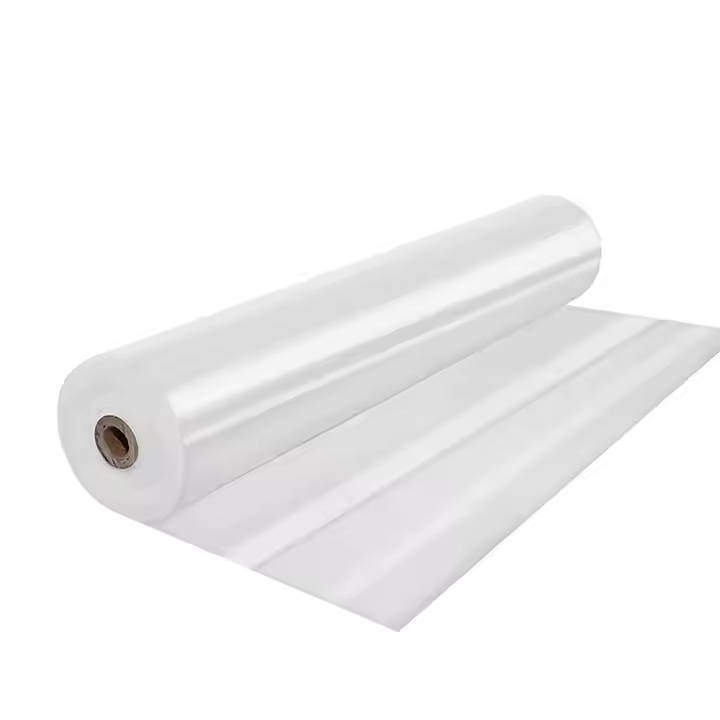
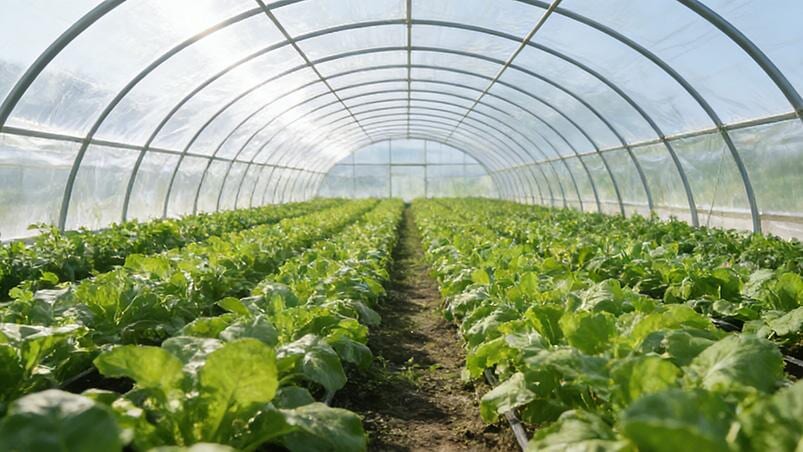
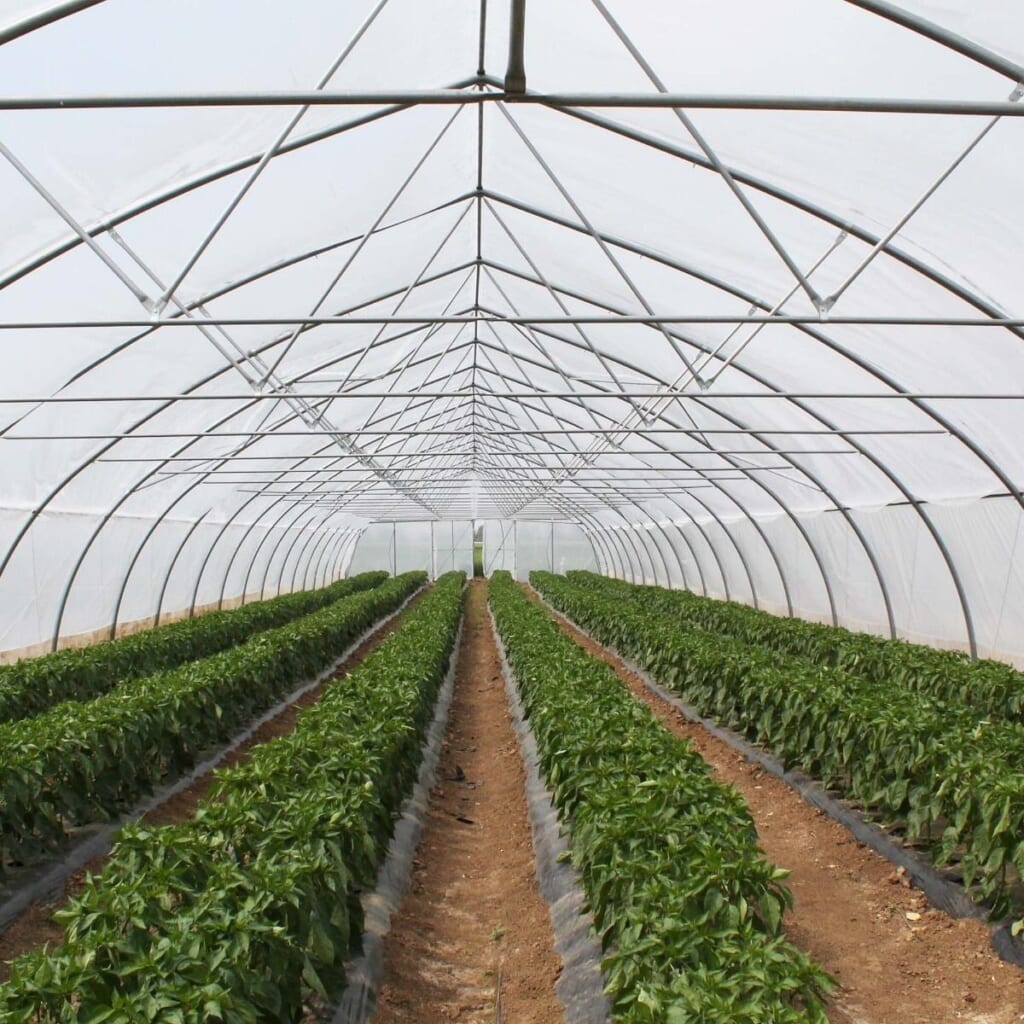
Greenhouse film is a flexible plastic covering material used to protect crops while allowing sunlight to enter the growing environment.
Most commercial greenhouse films are produced from polyethylene (PE), typically using LDPE, LLDPE or a combination of polyethylene materials.
Depending on the application, greenhouse film can be customized with different additives and performance characteristics, including:
- UV stabilization
- Anti-drip / anti-fog properties
- High light transmission
- Diffused light
- Thermal properties
- Sulfur resistance
- Different thicknesses and widths
The right formulation depends on the crop, climate and expected service life.
2. Why Film Thickness Matters
Thickness is one of the first specifications buyers normally consider.
Common greenhouse film thicknesses can range from relatively thin agricultural films to heavier commercial coverings.
A thicker film can provide greater mechanical strength and durability, but thickness alone does not determine the overall performance of the film.
For example, two films with the same thickness may perform differently depending on:
- Resin selection
- Film structure
- UV stabilization
- Additives
- Production technology
- Environmental conditions
For commercial projects, it is therefore important to evaluate the complete specification rather than selecting film based only on micron thickness.
3. UV Stabilization for Outdoor Applications
Greenhouse film is continuously exposed to sunlight. Without appropriate UV stabilization, polyethylene film can degrade more quickly under outdoor conditions.
The required UV protection depends on the expected service life and local environmental conditions.
For projects in regions with strong sunlight, buyers may specify a certain UV additive concentration or expected service life. Some projects may also require additional resistance to specific agricultural chemicals.
This is why greenhouse film should be formulated according to the actual growing environment rather than using a standard formulation for every market.
4. Sulfur Resistance Can Be Important
Some greenhouse applications require the film to withstand exposure to sulfur-based agricultural treatments.
In these cases, sulfur resistance should be discussed during the specification stage.
The compatibility between UV stabilizers, other additives and agricultural chemicals can affect the film’s performance over time.
For this reason, buyers should communicate their chemical treatment practices to the film manufacturer before production.
5. Width and Roll Length
Greenhouse projects can require very wide films, especially for commercial structures.
Typical RFQ information should include:
- Film thickness
- Film width
- Roll length
- Film color
- Core diameter
- Roll weight
- Folding method
- Individual wrapping requirements
- Pallet requirements
For large-width greenhouse film, production capability and packaging should be discussed together with the technical specification.
6. Virgin PE vs. Recycled Material
For greenhouse covering applications, many commercial buyers specify virgin polyethylene resin because consistent raw material quality is important for film performance.
Depending on the application, the manufacturer may recommend LDPE, LLDPE or a suitable combination to achieve the required balance of flexibility, strength and optical properties.
If the project requires virgin resin, this should be clearly stated in the RFQ.
Conclusion
There is no single greenhouse film specification suitable for every greenhouse project.
The right film should be selected according to the climate, crop, greenhouse structure, expected service life, UV exposure and agricultural treatment conditions.
For more information about Hanpak’s plastic packaging products and Alibaba shop, please contact us:
Email: info@hanpak.com.vn
Hotline (Mobile/WhatsApp): +84 898 545 893
Our experienced sales team is ready to assist you. Contact us today to place your order and experience the quality and reliability that Hanpak offers.