
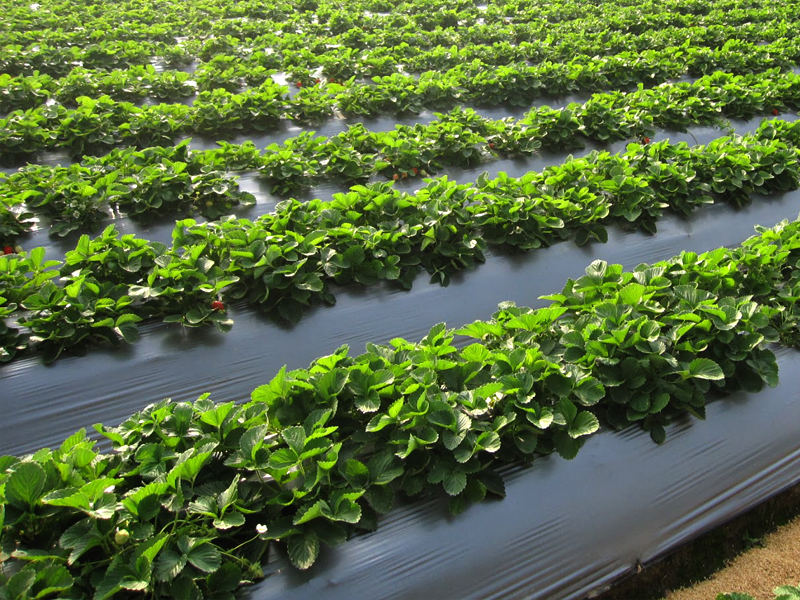
A sheet of polyethylene can do a surprising amount for a crop. It traps heat, holds in moisture, keeps insects off and blocks light where weeds would otherwise grow. That is why agricultural PE film turns up everywhere from large greenhouse farms to a balcony pot covered with a bag while its owner is on holiday.
The uses below run from field scale down to the home garden, followed by what a buyer should specify when ordering film for growers.
Greenhouse and tunnel covers
Clear PE film lets most daylight through while slowing heat loss, so a covered tunnel stays warmer and more humid than open ground. Growers can then manage temperature and moisture by opening or closing vents. A closed structure also acts as a physical barrier against many flying insects, which can reduce the need for pesticide spraying. Film for this job must be UV-stabilised; untreated PE becomes brittle within a season under strong sun.
Mulch film on the ground
Laid over planting beds, mulch film keeps soil moisture in, warms the root zone and stops weeds by cutting off light. Colour changes the effect:
| Film colour | Main effect | Typical use |
|---|---|---|
| Black | Blocks light, so weeds cannot grow; warms soil moderately | Vegetables, strawberries, general weed control |
| Clear | Warms soil the most, but weeds can grow underneath | Early-season warming, soil solarisation |
| White or silver on black | Reflects light and keeps soil cooler; black side still blocks weeds | Hot climates, some insect-deterrent uses |
Frost and cold protection
Polyethylene conducts heat poorly, so a cover thrown over young plants during a cold night slows the loss of warmth from the soil. Support the film on hoops or stakes where possible, because film resting directly on leaves can transfer cold to them. Remove or vent the cover on sunny days to avoid overheating.
Smaller jobs in the home garden
Gardeners use ordinary plastic bags and offcuts of sheeting in several clever ways:
Holiday watering. A clear bag placed loosely over a pot creates a mini greenhouse. Water evaporating from the soil condenses on the inside and runs back down, so the plant stays moist for days. Remove yellowing leaves first, make a few small air holes, and check after about a week.
Rooting cuttings and air layers. Wrapping a cutting, or the moss around an air-layered stem, in film keeps warmth and humidity steady and protects the wound from pests while roots form.
Light control for flowering. Some plants flower in response to day length. Covering them with an opaque black bag for part of each day can be used to encourage buds, a technique long used by growers of plants such as poinsettias. Leave some ventilation.
Spot pest treatment. Bagging a small infested plant before treating it keeps the spray contained rather than drifting around the balcony or garden.
How to specify agricultural PE film
Start with the job, then fix width, thickness in microns, colour, UV stabilisation (and for how many seasons), and roll length or weight. Mulch film is usually thin and wide; greenhouse covers are thicker and need stronger UV protection. Ask how rolls will be cored and wrapped, because film damaged at the edges in transit is hard to lay straight. Hanpak supplies poly sheeting in a range of widths and thicknesses, and lay flat tubing that growers convert into sleeves and covers. Heavy black contractor bags are a handy option for collecting used film and garden waste.
Buyers often ask for thicker greenhouse film to make it last longer, but in strong sunlight the UV package matters more than the extra microns. If the film is for outdoor use beyond one season, we usually suggest agreeing the UV level first and only then deciding the thickness, so you are not paying for plastic that fails for a different reason.
From the Hanpak team
Need film for growers?
Share the width, thickness, colour and quantity and we will send a quote within 48 hours. Request a quote or samples online, or contact us directly on WhatsApp.