
OPP bags (the “cello bags” most US shops sell) are made of oriented polypropylene: glass-clear, stiff, crinkly, and they hardly stretch. PE bags are polyethylene: softer, a little hazy, they stretch before they tear and they stay flexible in the freezer. Pick OPP when the product has to look its best on a shelf. Pick PE when the bag has to take weight, cold or rough handling.
We make both at Hanpak, so we see buyers mix them up every week. Below is the quick comparison, a few hands-on ways to tell them apart, and which one fits which job.
OPP vs PE bags at a glance
| Property | OPP / cello bag (PP) | LDPE bag | HDPE bag |
|---|---|---|---|
| Resin code | 5 (PP) | 4 (LDPE) | 2 (HDPE) |
| Clarity | Crystal clear, glossy | Clear with a slight haze | Translucent, frosty |
| Feel | Stiff, crisp, loud crinkle | Soft, smooth, quiet | Crisp, papery |
| Stretch | Almost none | Stretches a lot before breaking | Stretches a little |
| Tear behavior | Strong until nicked, then tears fast | Resists tearing, punctures stretch first | Strong for its weight, punctures on sharp edges |
| Cold | Turns brittle below 32°F (0°C) | Fine for freezing | Fine for freezing |
| Melting point (approx.) | 320–330°F (160–166°C) | 220–240°F (105–115°C) | about 265–275°F (130–135°C) |
| Typical thickness | 1–2 mil (25–50 µm) | 1–6 mil (25–150 µm) | 0.3–1 mil (8–25 µm) |
| Typical uses | Garment bags, cards, candy, bakery, gift and retail display | Zipper bags, flat poly bags, mailers, food storage, liners | T-shirt bags, produce rolls, thin trash bags |
| Cost per bag | Usually a bit higher | Middle | Lowest at the same strength |
Ranges are typical market figures, not limits. Exact properties depend on the grade and the blend.
Need OPP or PE bags in bulk?
We make crystal-clear OPP cello bags and soft PE poly bags to your size and print, factory-direct from Vietnam.
OPP & Cello Bags · Poly Flat Bags · Zipper Bags
Request a quote or WhatsApp +84 898 545 893What an OPP (cello) bag is

OPP stands for oriented polypropylene. The film is stretched during production, and stretching lines up the polymer chains. That is what makes OPP so clear and so stiff. When the film is stretched in two directions it is called BOPP, and most cello bags on the US market are made from it.
The name “cello” is a leftover. Real cellophane is regenerated cellulose made from wood pulp. Today almost every bag sold as a cello or cellophane bag is polypropylene. If you need true cellulose film for a compostable claim, ask for it by name and ask for the certificate, because a polypropylene cello bag is not compostable.
Where OPP shines:
- It shows the product. Greeting cards, apparel, cookies and candles look sharper behind OPP than behind PE.
- It keeps its shape. The bag stands neat on a peg or in a box, with no sagging.
- It prints well and takes a self-adhesive lip, a header or a hang hole.
Where it lets you down:
- Once the edge is nicked, it tears straight across with very little force. The seal area is the usual weak point.
- It does not stretch, so sharp corners and heavy loads split it.
- It goes brittle below freezing. Don’t use OPP for frozen food.
OPP vs CPP vs plain PP
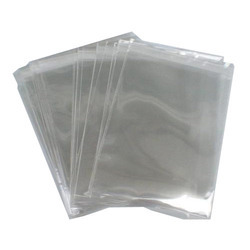
Not every PP bag is oriented. Cast polypropylene (CPP) is made without the stretching step. It is a little less clear and less stiff than OPP, but it is tougher and more flexible, and it seals well. Many buyers use OPP and PP as if they were the same word. When you send a spec, say which one you mean, or just send a sample bag and we will match it.
What a PE bag is
PE is polyethylene, the most common bag plastic in the world. It comes in two families that behave very differently.
HDPE: thin, strong, crisp

High-density polyethylene has tightly packed chains. It feels crisp and slightly papery, it is translucent rather than clear, and it is strong for its weight. That is why grocery T-shirt bags and produce bags on roll are HDPE: you get the strength at 0.5 mil or less, which keeps the cost per bag down. The trade-off is puncture. A sharp corner goes straight through HDPE.
LDPE and LLDPE: soft, clear, stretchy

Low-density polyethylene has a looser structure. It feels soft, it is clearer than HDPE, and it stretches a long way before it breaks. LLDPE is a related grade that adds puncture and tear resistance, and most of our blends use some of it. Zipper bags, flat poly bags, mailers and heavy trash bags are LDPE or LLDPE.
How to tell OPP and PE bags apart
You don’t need a lab. These checks take a minute with a sample in your hand.
- Listen. Crumple the bag. OPP makes a loud, sharp crackle. LDPE is almost silent. HDPE rustles like thin paper.
- Look. Lay the bag on printed text. OPP is glass-clear and glossy. LDPE has a slight milky haze. HDPE looks frosted.
- Stretch. Pull a strip between two hands. PE stretches and goes thin and white before it breaks. OPP barely moves, then snaps or tears.
- Nick and tear. Make a tiny cut on the edge and pull. OPP tears straight across with almost no effort. PE resists and stretches around the cut.
- Check the code. If the bag or its carton carries a resin code, 5 means PP, 4 means LDPE and 2 means HDPE.
One test that does not work: dropping the film in water. PP and PE both float, because both are lighter than water.
Which bag should you choose?
Choose OPP when
- The bag is part of the display: apparel, greeting cards, photos, candles, soaps, bakery and candy.
- The item is light and has no sharp corners.
- You want a self-adhesive resealable lip and a crisp, upright look.
- The product stays at room temperature.
Choose PE when
- The bag carries weight or gets thrown around in a warehouse or a mail sack.
- The product goes in the freezer or a cold room.
- You need a zipper, a drawstring or a soft handle.
- Price per bag matters more than sparkle. HDPE gives you the most bags per pound of resin.
A quick rule we give new buyers: if a shopper will see the bag on a shelf and the item is light, start with OPP. In every other case, start with PE and only move to OPP if the PE sample does not look good enough.
Food contact
Both polypropylene and polyethylene are covered by the same US FDA regulation for olefin polymers. Our food-contact OPP and PE bags are FDA-compliant food-contact material (21 CFR 177.1520). That covers the resin. If your product is hot-filled, oily or acidic, tell us at quote stage so we can choose the right grade and thickness. For cold or frozen food, use PE, not OPP.
Buying tips for importers
- Name the material plainly. “Cello bag” can mean OPP, CPP or even PE on a supplier’s price list. Write “OPP, 1.2 mil (30 µm), self-adhesive lip” or send a physical sample.
- Measure the bag, not the opening. For OPP bags with a lip, state width x length and lip size separately. Lip size changes how much product fits.
- Check the seal strength on samples. With OPP the side seal is where problems show up. Fill a sample with your real product and drop it.
- Ask about printing early. We print up to 8 colors by gravure, one or both sides, with a white base layer under the artwork on clear film so colors don’t look washed out.
- Plan your timing. First printed orders take 4–6 weeks, repeat orders 3–4 weeks. Plain samples from stock are free.
Our OPP range is on the PP and OPP plastic bags page. For PE, see zipper bags and flat poly bags. All are made to custom size.
FAQ
Are cello bags the same as OPP bags?
Almost always, yes. Modern cello bags are oriented polypropylene. True cellophane is a cellulose film made from wood pulp and is a different, more expensive product. If a listing says “cellophane” and the price is low, it is very likely OPP.
Which is stronger, OPP or PE?
It depends on the kind of strength. OPP has higher tensile strength and holds its shape, but once it is nicked it tears easily. PE, especially LDPE and LLDPE, stretches and absorbs impact, so it survives drops, corners and heavy loads better. For carrying weight, PE wins.
Can OPP bags go in the freezer?
We don’t recommend it. Polypropylene becomes brittle below 32°F (0°C) and can crack when the bag is handled frozen. Use LDPE or LLDPE bags for frozen food.
Are OPP bags food safe?
Food-grade OPP is used every day for bakery, candy and dry snacks. Our food-contact OPP bags are FDA-compliant food-contact material (21 CFR 177.1520). Tell us what the food is and how it is packed so we can confirm the right grade.
Are OPP and PE bags recyclable?
Both are recyclable as materials, but collection depends on where you are. Many US curbside programs don’t take plastic film of either type. Check your local rules before printing a recycling claim on the bag.
Not sure which film your product needs? Send us your item, bag size and a photo of how it will be displayed, and we will suggest OPP or PE with a thickness to match. Free samples come from stock. Send us your spec here.
Need OPP or PE bags in bulk?
We make crystal-clear OPP cello bags and soft PE poly bags to your size and print, factory-direct from Vietnam.
OPP & Cello Bags · Poly Flat Bags · Zipper Bags
Request a quote or WhatsApp +84 898 545 893