
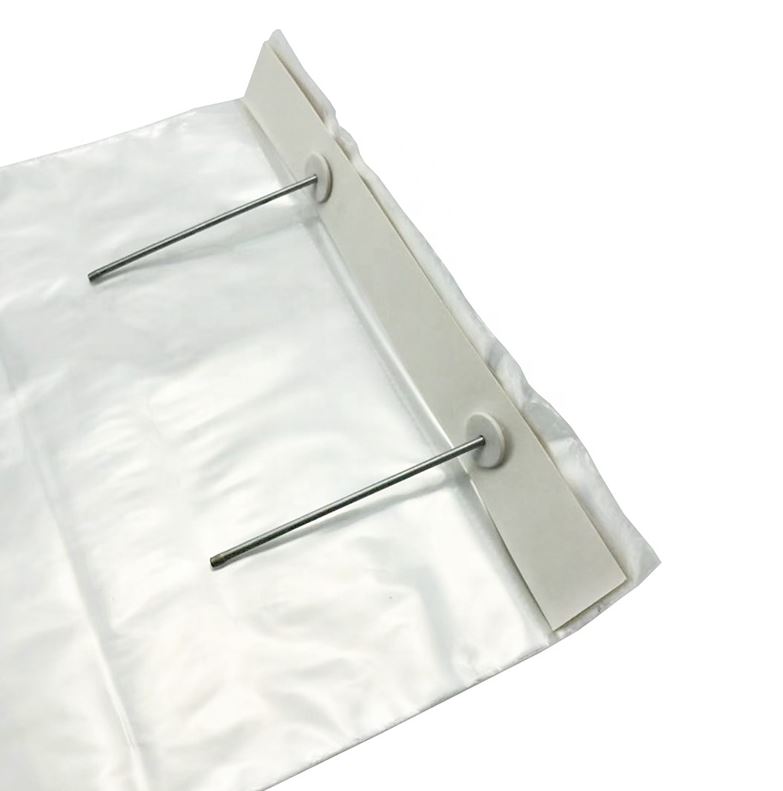
Picture a packing station with a stack of bags hanging on two wire pins. The operator, or a blower on a machine, opens the top bag, the product drops in, and the bag tears away from the stack. That is the whole idea of a wicket. The list of wicketed poly bags uses is long because so many industries pack the same item over and over at speed. Here is how different sectors use them and what each one tends to specify.

A quick definition
A wicket bag is a flat or gusseted poly bag with an extended flap at the mouth. Holes punched in that flap let the bags be stacked on a wire wicket, so they stay aligned and in order. Most are made from LDPE, with HDPE and LLDPE used when the job calls for a crisper or tougher film. Options include bottom gussets, vent holes, tinted film, printing and resealable tape.
Wicketed poly bags uses by industry
Bakeries
Bread is the classic case. Sliced loaves, buns and rolls are pushed into gusseted bags straight off the slicer. Clear LDPE shows the product, and the gusset gives room for a square loaf. Our wicket and bread bags page shows the common formats.
Fresh produce packers
Grapes, cherries, carrots and salad mixes are often bagged on a wicket at the packhouse. Vent holes or micro-perforations let the produce breathe and reduce condensation. A light tint or printed panel can help with branding at the shelf.
Food service and catering
Kitchens use large wicketed bags as pan and tray covers. Sliding a whole sheet pan into a bag is quicker than wrapping it with film, and the bag keeps dough or prepared food covered in the walk-in chiller. Because the bags hang on a wicket near the prep area, staff take one at a time without the rest getting dirty.
Frozen and processed food
Frozen vegetables, ice and portioned snacks are filled on vertical or horizontal lines using wicketed stacks. Here LLDPE in the blend helps the bag resist cracking in the cold. Resin for food-contact items Hanpak supplies complies with FDA 21 CFR 177.1520.
Hardware, parts and components
Screws, fittings, cables and small spare parts are counted into wicket bags for kits and display hooks. A thicker, puncture-resistant film keeps sharp edges from poking through, and the bag stops parts from scratching each other in transit.
Promotions and retail packs
Sample packs, sock and apparel multipacks and giveaways often use custom-printed wicket bags. The print area on the face can carry a brand, and a header with a hang hole turns the same bag into a display item. See our custom printing page for what is possible.

Matching the bag to the application
| Use | Usual film | Features to ask for |
|---|---|---|
| Bread and buns | LDPE | Bottom gusset, high clarity |
| Fresh produce | LDPE or HDPE | Vents or perforations, print |
| Pan covers | LDPE | Large size, light gauge |
| Frozen food | LDPE/LLDPE blend | Cold-crack resistance |
| Hardware | LDPE/LLDPE, thicker gauge | Puncture resistance, header hole |
If you run more than one product on the same line, we usually suggest keeping the wicket hole pattern identical across all your bag sizes. Changeovers then only need a new stack, not a new wicket setting, and the risk of loading the wrong pins disappears.
From the Hanpak team
Hanpak supplies wicket bags in LDPE, HDPE and LLDPE, plain or printed. MOQ is flexible and quoted per size and design. A first order typically takes 4 to 6 weeks from sample approval, and repeat orders 3 to 4 weeks. Shops that hand goods over the counter may also find T-shirt bags useful alongside their wicketed range.
Ask about wicket bags for your line
Tell us what you pack and how you fill it, and we will suggest a film and size. Request a quote or samples, or reach the team on WhatsApp. Stock samples are free.