

Ask a food distributor why most of their range still ships in polyethylene and the answer is usually short: it protects the product, it costs little, and it barely adds to the freight bill. Those three points sum up the main advantages of plastic bags for food packaging. Below we look at each one from the point of view of a buyer who has to balance shelf performance against landed cost.
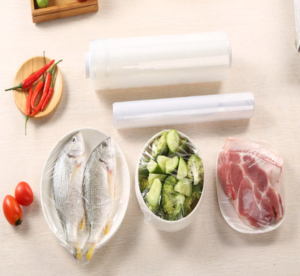
Protection is the first advantage of plastic food bags
Food spoils for predictable reasons. Moisture gets in or escapes, air carries odours from neighbouring goods, dust settles on open product, and handling leaves fingerprints and bacteria behind. A sealed polyethylene bag deals with most of these at once. It is waterproof, it keeps the product separate from whatever sits next to it on the pallet, and it stays intact in a chiller or freezer where paper would soften and tear.
For products that need a stronger oxygen barrier, such as cured meat or cheese, a multilayer film is the usual step up. Plain PE handles fresh produce, bakery and dry goods well; nylon-PE laminates are used for vacuum bags where air has to stay out for weeks.
Light on the truck, light in the warehouse
A carton of flat bags holds thousands of units and weighs a fraction of the same count of rigid tubs or trays. That matters twice. Inbound, you fit far more packaging into a container, so the freight cost per bag is small. Outbound, the packed product itself weighs less, which helps on courier and pallet rates. Empty bags also take almost no shelf space in a back room, which smaller food businesses appreciate.
How plastic compares with the usual alternatives
| Factor | PE plastic bag | Paper bag | Rigid plastic tub |
|---|---|---|---|
| Moisture resistance | High | Low | High |
| Chiller and freezer use | Good | Poor | Good |
| Weight per unit | Very low | Low to medium | High |
| Storage space when empty | Minimal | Moderate | Large |
| Product visibility | Clear film possible | Needs a window | Clear options exist |
Each material has its place. Paper suits dry bakery items sold the same day, and tubs work for liquids and salads. For most loose, frozen or portioned foods, though, a bag gives the best mix of protection and cost.
Cost per unit that suits small and large buyers
Polyethylene is an inexpensive resin and bag making is a fast, mature process. The result is a unit price that a corner shop can afford and that a national chain can scale. Because size, gauge and print are set per order, a buyer can also trim cost by matching thickness to the job instead of buying one heavy bag for everything.
A printable surface for your brand
PE film takes flexographic print well, so the bag can carry a logo, ingredients, barcode and handling advice. On a busy shelf that turns plain packaging into a small advert. Private label printing is common on zipper, produce and bread bags, and simple one or two colour designs keep plate costs down.
Recycling and material choices
Mono-material PE bags are easier to recycle than mixed laminates, because the film is one polymer. If your market collects soft plastics, specifying a single material is a sensible move. Some buyers also ask about biodegradable bags; these suit certain uses, but check that they fit the disposal routes your customers actually have.
A useful check before you order is to pack a few real portions in a sample bag, freeze them overnight and drop the bag from table height. If the corners split, ask for a slightly higher LLDPE content in the blend rather than simply a thicker film. Toughness often improves without adding much weight.
From the Hanpak team
Frequently Asked Questions
Are plastic food bags safe for direct contact with food?
They are when the resin is food grade. For food-contact items Hanpak supplies, the resin complies with FDA 21 CFR 177.1520, and SGS test reports are available for many products. For other items, SGS testing can be arranged on your order.
Which plastic is most common for food bags?
LDPE and LLDPE are the usual choices for soft, clear bags such as freezer and zipper bags. HDPE gives a thinner, crisper film that suits produce rolls and deli counters.
Get pricing on food packaging bags
Send us the size, thickness and print you have in mind and we will reply with a quote within 48 hours. You can request a quote or samples through our contact page or message the team on WhatsApp. Stock samples are free.