

One of the most common questions in warehouse operations is: how much stretch film per pallet is actually necessary?
Using too little stretch film increases load instability and product damage. Using too much wastes material and increases packaging costs.
Finding the right balance helps reduce expenses while maintaining proper load containment.
This guide explains exactly how to calculate stretch film usage per pallet and optimize your wrapping process.
Why Stretch Film Usage Per Pallet Matters
The Hidden Impact of Overusing Stretch Film
While many warehouses focus on preventing under-wrapping, overusing stretch film is an equally common and costly mistake. When companies fail to monitor how much stretch film per pallet is being applied, material waste quietly increases month after month.
Excess wrapping may seem harmless, but it creates several operational issues:
- Higher material cost per pallet
- Increased plastic waste
- Longer wrapping time
- Reduced machine efficiency
- Higher freight weight over time
In high-volume distribution centers shipping thousands of pallets per month, even an extra 50–100 grams of film per pallet can translate into tens of thousands of dollars annually.
Moreover, overwrapping does not always improve load stability. Beyond a certain point, additional layers provide diminishing returns in containment force. Proper film tension, correct overlap ratio, and strategic reinforcement at the base are far more important than simply adding more revolutions.
For companies serious about cost optimization, conducting a stretch film usage audit can uncover:
- Inconsistent operator techniques
- Incorrect machine settings
- Film grade mismatches
- Opportunities for downgauging
By analyzing actual usage data and testing containment force scientifically, businesses can determine the true optimal amount of stretch film per pallet – balancing stability with cost efficiency.
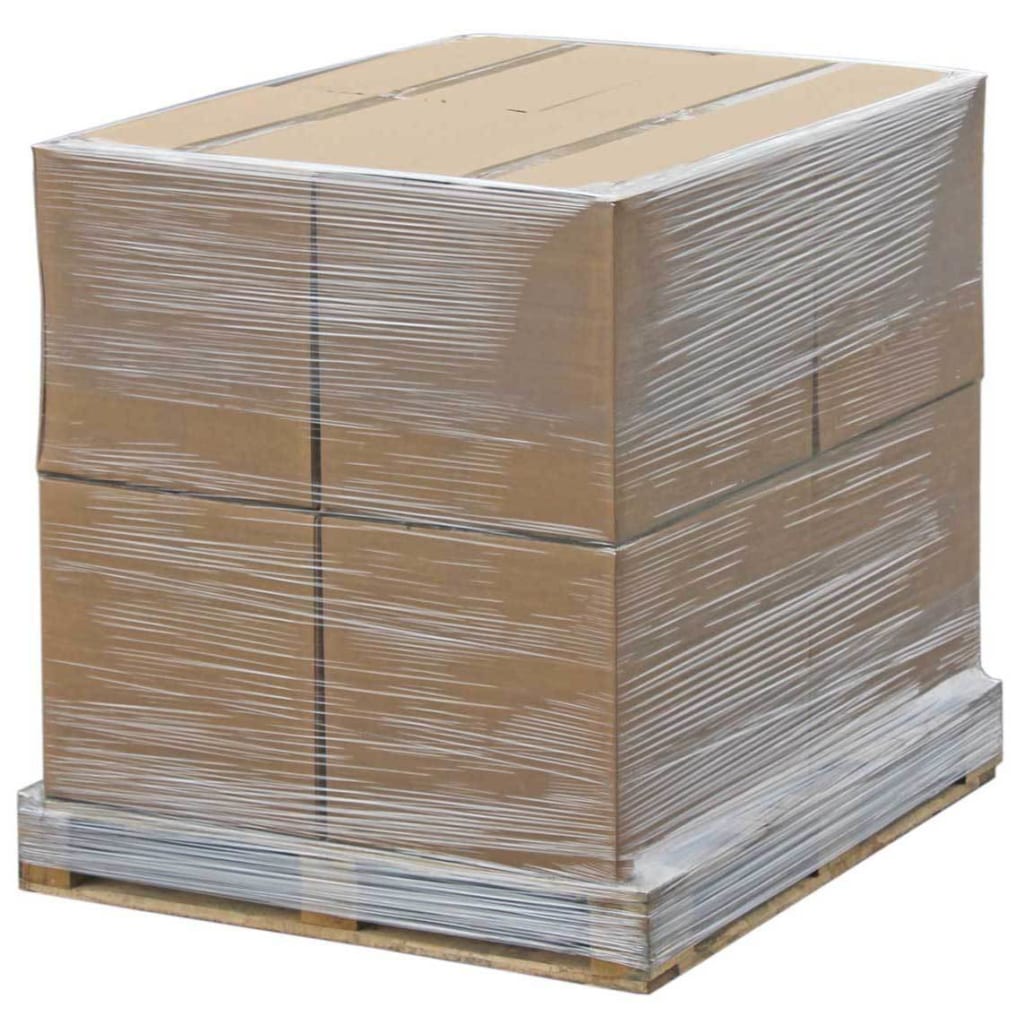
Average Stretch Film Usage Per Pallet
Typical usage depends on load size, wrapping method, and film type.
General Industry Estimates:
- Hand wrapping: 250–400 grams (0.55–0.88 lbs) per pallet
- Machine wrapping: 150–300 grams (0.33–0.66 lbs) per pallet
- High-performance film systems: 120–250 grams per pallet
Machine wrapping usually reduces stretch film usage by 20–40%.
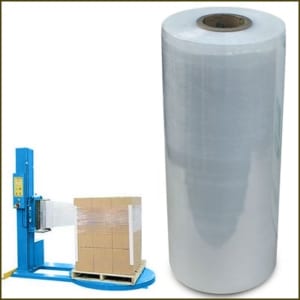
Factors That Affect How Much Stretch Film Per Pallet You Need
1️⃣ Pallet Size and Load Height
Standard US pallet: 48” x 40”
Higher loads require:
- More revolutions
- Greater containment force
- Additional top wraps
Taller pallets increase film consumption.

2️⃣ Load Weight and Stability
Heavier or unstable loads require:
- Higher wrap tension
- More bottom wraps
- Reinforced top layers
Irregular cartons increase film usage.
3️⃣ Film Type and Performance
Different films provide different containment strength:
- Standard cast stretch film
- Blown stretch film
- Pre-stretch film
- High-performance downgauged film
Higher-quality film often reduces total material used per pallet.
4️⃣ Number of Wrap Revolutions
A common wrapping pattern:
- 2–3 bottom wraps
- Upward spiral overlap (50%)
- 2–3 top wraps
- Downward spiral
- Final bottom reinforcement
Excess revolutions significantly increase film usage.
How to Calculate Stretch Film Per Pallet
Here’s a simplified calculation method:
Step 1: Measure Pallet Circumference
For a 48” x 40” pallet:
Circumference ≈ 176 inches (4.47 meters)
Step 2: Estimate Number of Wraps
Example:
- 12 revolutions total
Step 3: Multiply
176 inches × 12 wraps = 2,112 inches (176 feet)
How to Reduce Stretch Film Usage Per Pallet
✅ Upgrade to High-Performance Film
Downgauging (using thinner but stronger film) can reduce material use by 15–30%.
✅ Optimize Wrap Pattern
Avoid excessive top and bottom wraps.
✅ Train Operators
Inconsistent wrapping dramatically increases usage variation.
Hand Wrap vs Machine Wrap: Which Uses Less Film?
| Method | Film Usage | Consistency | Cost Efficiency |
|---|---|---|---|
| Hand Wrap | Higher | Variable | Lower |
| Machine Wrap | Lower | Consistent | Higher ROI |
Machine wrapping systems provide more predictable stretch film usage per pallet.

Cost Example: Annual Savings Potential
If you ship:
- 20,000 pallets per year
- Reduce film usage by 100 grams per pallet
You save 2,000 kg (4,409 lbs) of stretch film annually.
That translates into substantial cost savings.
The Balance Between Cost and Load Stability
Reducing stretch film per pallet should never compromise load containment.
Insufficient wrapping can cause:
- Collapsed pallets
- Damaged products
- Freight claims
- Workplace injuries
Optimization is about efficiency – not under-wrapping.

Final Thoughts
So, how much stretch film per pallet do you really need?
It depends on:
- Load weight
- Pallet height
- Film quality
- Wrapping method
Most warehouses use between 150-400 grams per pallet, depending on system and load type.
By measuring, testing, and upgrading materials, companies can reduce costs while maintaining strong load stability.
For more information about our stretch film made by Hanpak, or for any other plastic packaging solutions, please reach out to us:
- Email: info@hanpak.com.vn
- Hotline (Mobile/WhatsApp): +84 898 545 893
Our friendly team is always ready to support you. Contact us today to place your order and experience the quality, reliability, and convenience of Hanpak’s products!